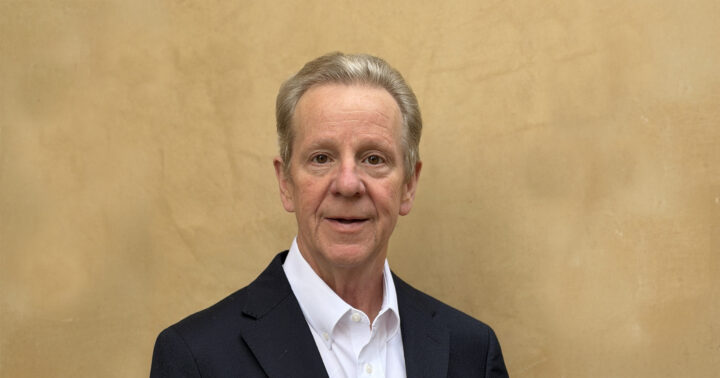
Altay Therapeutics is racing into the clinical stage trials of its first small-molecule inhibitor targeting transcription factors, something many pharmaceutical researchers considered nearly impossible. For CEO Dr. Jim Breitmeyer, M.D., Ph.D., it’s another exciting phase in a career of more than 35 years.
Breitmeyer started out straddling the two worlds of academia and the clinic. He joined the faculty at Harvard Medical School and the Dana-Farber Cancer Institute after his medical residency, running a research lab while also treating patients for nearly a decade.
“A group of colleagues there started a biotech company and asked me to help,” recalls Breitmeyer. “And I found it exciting and fulfilling.”
He made a full transition into biotech when he joined the Boston-based Serono Laboratories and led his first development program, which eventually secured several FDA approvals. Breitmeyer then held a variety of R&D and senior executive roles at companies such as Eli Lilly, Zogenix, Bavarian Nordic, and Oncternal Therapeutics (which he co-founded). Along the way, he guided another half-dozen therapies across the finish line to FDA approval.
“I found that I was interested in every part of the drug development process,” he says. “I ended up managing discovery research, all phases of clinical trials, manufacturing, and commercial, including drug safety and medical affairs.”
In the fall of 2025, he joined SOLVE FSHD, a venture-philanthropic organization funding research into potential treatments of Facioscapulohumeral Muscular Dystrophy (FSHD), a form of muscular dystrophy with no currently approved disease-modifying therapies.
Breitmeyer’s experience helming programs from development to FDA approval was ideal to help manage SOLVE FSHD’s portfolio of biotech investments. And among the portfolio companies was Altay Therapeutics, where Executive Chair Mike Grey thought Breitmeyer’s background was also perfect for the company’s open CEO position.
“Floppy proteins are very hard to create drugs against.”
Based in the San Francisco Bay Area, Altay Therapeutics was founded in 2017 by Dr. Osman Ozes, Ph.D., and Dr. Ali Ozes, Ph.D. The father-and-son scientists had created a platform to identify small molecules that block transcription factors, an area of drug discovery many pharmaceutical researchers had once written off.
As proteins regulating gene expression, transcription factors control the conversion of genetic information from DNA into RNA and play a central role in many disease pathways. A root cause of FSHD, for example, is the double homeobox 4 (DUX4) transcription factor, which activates the gene expression that leads to cell death, impaired muscle regeneration, and progressive muscle atrophy in FSHD.
Yet transcription factors have long been considered “undruggable”.
“There are many, many failures over decades trying to create drugs against transcription factors,” says Breitmeyer, who explains that they’re known as disordered or “floppy” proteins because they lack a well-defined 3-D structure. “Floppy proteins are very hard to create drugs against.”
To block a transcription factor, a molecule must bind to the protein when it adopts a more ordered structure. In the past, researchers have focused on when the transcription factor interacts with DNA or other proteins, but that targeting was too broad and blocked other transcription factors, causing toxicity.
Altay Therapeutics takes a different approach.
First, a transcription factor’s dynamic binding sites are identified for targeting to avoid non-specific off-target toxicity. Then, proprietary AI modeling and algorithms screen millions of molecules against the target sites for potential inhibitors.
“In the case of FSHD, several hundred potential fits popped out,” says Breitmeyer. “Samples of all of those molecules were tested to see if they could block the transcription factor DUX4. One molecule did.”
Iterative rounds of chemical synthesis and analysis then test derivatives of the molecule for the most potency and drug-like properties. The DUX4 blocker led to DX5057, an orally bioavailable small-molecule inhibitor for FSHD and the company’s lead drug candidate.
Altay has other transcription factor inhibitors in the pipeline targeting STAT3 and ETS family proteins, but Breitmeyer says the current focus is on advancing DX5057 into clinical development.
“We’re the first oral inhibitor of this DUX4 protein in FSHD,” he explains. “And we are moving rapidly toward our first-in-human Phase 1 clinical trial.”
A hands-on investment approach
DX5057’s initial clinical trials will be in Australia, beginning in early 2027. The subsequent Phase 2a trial will be a global, multicenter study.
The accelerating clinical development follows Altay’s closing of a $37 million Series A financing round co-led by Sound Bioventures.
“They did very thorough due diligence that involved lots of questions and answers, but they also did a lot of their own independent homework,” says Breitmeyer, who credits Sound Bioventures as instrumental in helping attract other high-caliber investors and describes the firm as “hands-on in a very good way.”
Now, according to Breitmeyer, the company has pivotal and energizing times ahead.
“Altay has an exciting potential therapy for FSHD,” he says. “And we are excited to be working with Sound Bioventures.”
Read other stories like this. Explore profiles of other CEOs and companies in the Sound Bioventures portfolio.